

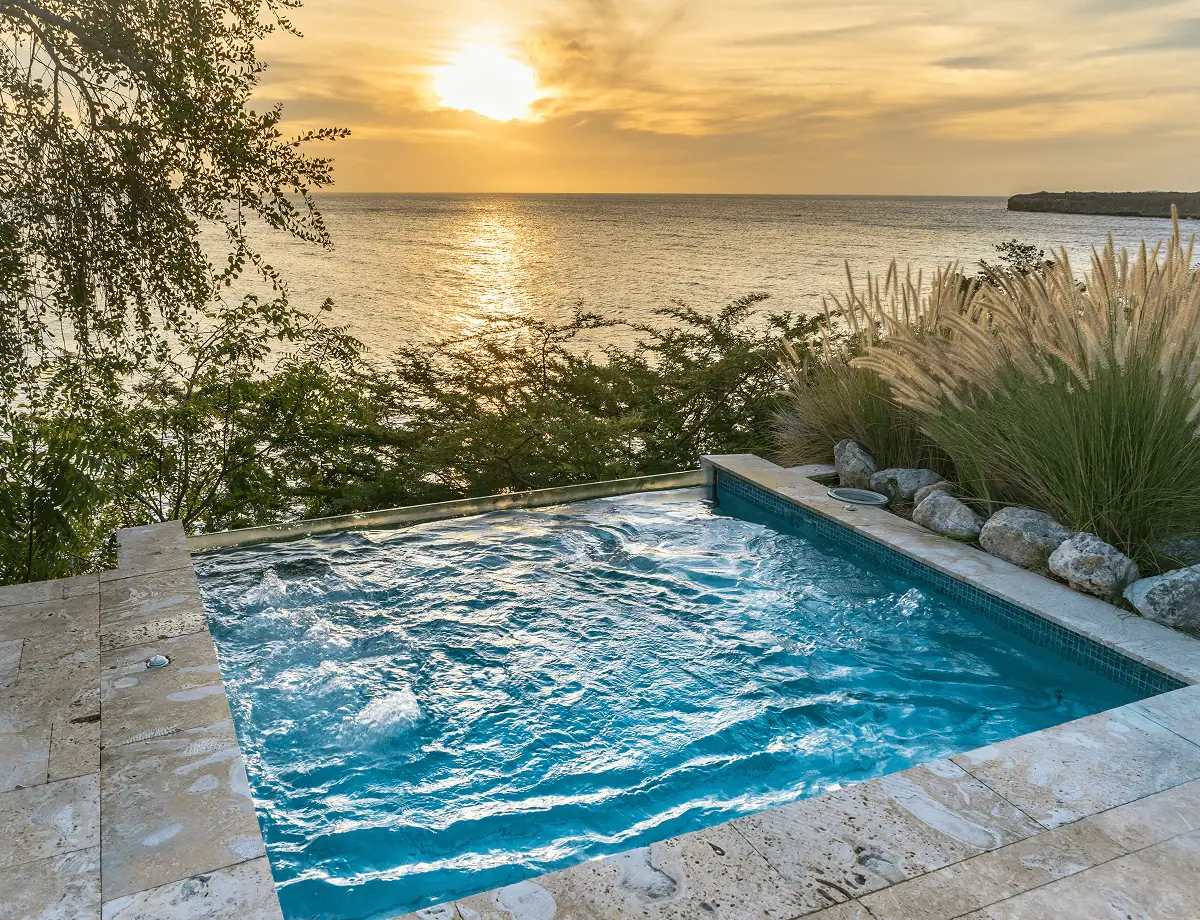
A plunge pool is a compact pool designed for cooling off, relaxing, light movement, and small-backyard water use. It is usually much smaller than a traditional swimming pool and is not designed for proper lap swimming or diving.
The important part is that a plunge pool is still a pool system. It still needs the right pump, filter, sanitiser, heating option, cleaner, cover, and safety planning. The shell gives you the water space. The equipment decides how easy that water space is to own.
Quick Answer: What Makes a Plunge Pool Different?
A plunge pool is different from a standard swimming pool in three practical ways:
| Difference | What it means for the homeowner |
| Smaller footprint | It can suit courtyards, compact backyards, narrow outdoor areas, and homes where a full-sized pool would dominate the space. |
| Different use case | It is better for cooling, relaxing, sitting, light movement, and family splash time than lap swimming or diving. |
| Smaller water volume | It can reduce some heating, cleaning, and chemical demand, but it does not remove the need for proper circulation, filtration, sanitation, and safety barriers. |
This is why a plunge pool should not be judged only by its size. A small pool with the wrong equipment can still be expensive, noisy, hard to heat, or annoying to maintain.
The Mistake to Avoid: Choosing the Shell Without the System
Many buyers start with the pool shell: size, shape, colour, steps, and where it will sit in the backyard. Those choices matter, but they do not decide the full ownership experience.
The system around the shell matters just as much:
- pump and filter for circulation and clarity
- chlorinator or sanitising system for water safety
- heater or heat pump for extended use
- cover for heat retention, evaporation control, and debris reduction
- robotic cleaner or manual cleaning tools
- lighting and automation if convenience matters
Oversizing equipment is not automatically better. Energy Rating guidance for pool pumps notes that a larger pump can cost more upfront and more to run; it can also put more pressure on the filter, interfere with filtration, and shorten filter life. It recommends choosing the smallest pump size that is effective for the pool and its equipment.
For a plunge pool, the goal is not “maximum equipment.” The goal is a matched setup.
Plunge Pool vs Spa Pool vs Swim Spa vs Cold Plunge
These options are often confused because they all suit smaller spaces. They solve different problems.
| Option | Best for | Not ideal for | Key difference |
| Plunge pool | Cooling off, relaxing, compact backyard pool use, light movement | Lap swimming, diving, strong massage jets | A small pool-style setup with filtration, sanitation, optional heating, and optional cleaner |
| Spa pool | Warm soaking, seated relaxation, massage jets | Swimming or larger family splash space | Built around warm water, seating, and jet massage |
| Swim spa | Fitness swimming, current swimming, hydrotherapy | Buyers wanting a simple compact pool look | Uses a swim current or jet system for exercise |
| Cold plunge | Short cold-water recovery | Family pool use or outdoor leisure | Built for cold exposure, not general pool lifestyle |
Choose a plunge pool when you want a compact outdoor pool. Choose a spa pool when warm seated massage matters more. Choose a swim spa when swimming exercise is the priority. Choose a cold plunge when recovery is the main use.
Is a Plunge Pool Right for You?
Use this section before getting attached to a shell size or design.
| You want… | Plunge pool fit | Better alternative | Why it matters |
| A compact pool for summer cooling | Strong fit | — | This is the core plunge pool use case. |
| A usable water feature for a small backyard | Strong fit | — | It can add both function and visual value without taking over the whole yard. |
| Gentle movement or hydrotherapy-style use | Good fit | Spa pool if jets matter more | Plunge pools suit light movement, but not strong massage therapy. |
| A warm evening pool | Good fit with heating and cover | Spa pool if always-hot soaking is the goal | Heating changes the equipment and running-cost discussion. |
| Proper lap swimming | Poor fit | Swim spa or larger pool | A plunge pool is usually too short for meaningful laps. |
| Diving | Poor fit | Larger compliant pool | Plunge pools are not designed as diving pools. |
| Large pool parties | Limited fit | Standard swimming pool | The compact footprint limits activity and capacity. |
| Very low-maintenance ownership | Possible only with the right setup | Avoid under-equipped packages | Smaller water volume reduces some tasks but does not remove pool care. |
| Cold recovery | Usually poor fit | Cold plunge | The use case is different from leisure pool ownership. |
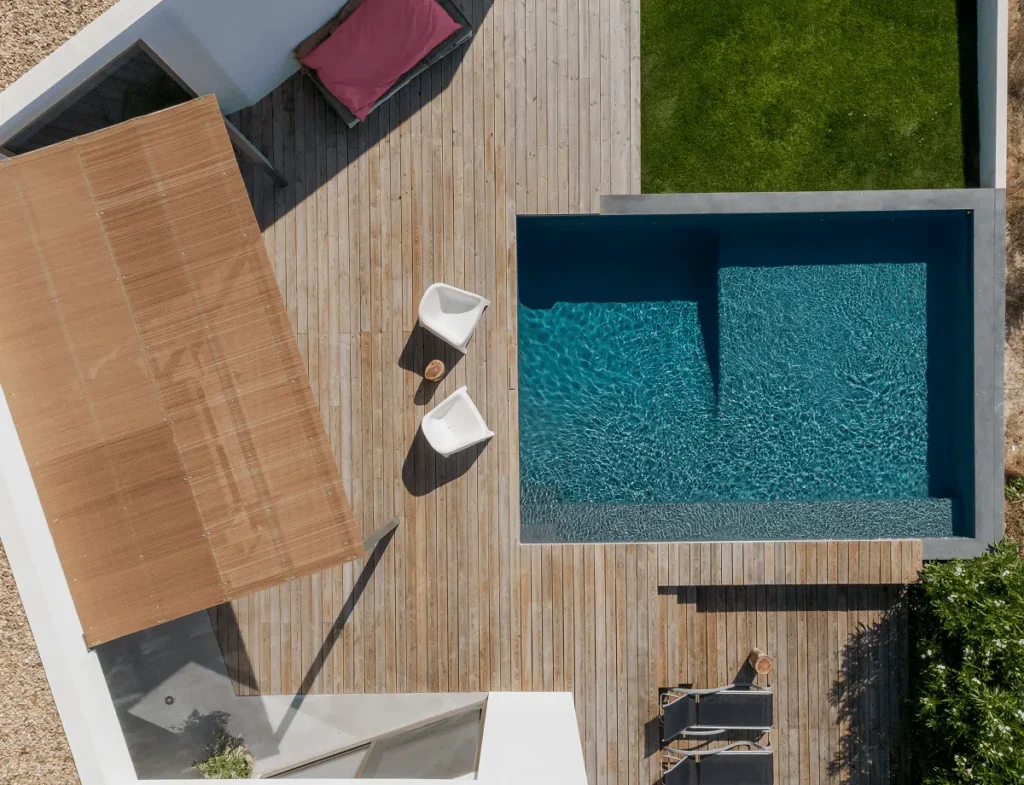
Common Plunge Pool Formats in Australia
The format affects installation, budget, design flexibility, and equipment planning.
Fibreglass plunge pools
Fibreglass plunge pools use a pre-formed shell. They suit homeowners who want a compact pool with a predictable shape, smooth finish, and less custom design complexity than concrete.
Concrete plunge pools
Concrete allows more custom shapes, depths, benches, steps, and finishes. It can suit difficult sites or highly specific designs, but usually brings more site work and project complexity.
Acrylic or pre-built plunge pools
Some pre-built plunge pools sit closer to large spa-style vessels. They can work for above-ground or semi-integrated installations, depending on the product and site.
In-ground, above-ground, or partially in-ground
Installation style changes the look and the practical requirements. Above-ground is not automatically simple. In-ground is not automatically better. Access, support, fencing, drainage, equipment location, and surrounding space still need to be planned.
What Is a Plunge Pool & What Equipment Does It Need?
A plunge pool normally needs the same core equipment categories as a larger pool, but they should be matched to the smaller water volume and intended use.
1. Pump and filter: keeping water moving and clear
The pump circulates the water. The filter removes particles. Together, they protect water clarity and help the sanitising system work properly.
Variable-speed pumps can be useful because they do not need to run at full speed all the time. Australian Government guidance says a 5-star variable-speed pump uses 55% less energy than a 1-star single-speed pump.
For a plunge pool, correct sizing matters more than buying the largest pump available.
2. Chlorinator or sanitising system: keeping water safe
A chlorinator can reduce daily and weekly maintenance, but it does not remove the need for water testing and balance. AstralPool chlorinator instructions note that regular maintenance is needed for accurate chlorine and pH sensing.
This matters in a plunge pool because smaller water volumes can respond quickly to heavy use, heat, rain, debris, and poor balance.
3. Heater or heat pump: extending the season
Heating changes how often you can use the pool. A cooling-only plunge pool may be mostly a summer feature. A heated plunge pool can become useful in evenings and shoulder seasons.
Heat pumps transfer heat from the surrounding air into the water. AstralPool explains that heat pumps draw heat from the air and transfer it into pool water as it circulates through the unit.
A heat pump also depends on circulation. Fluidra heat pump documentation states that the filter pump must be running for water to circulate through the heat pump.
4. Cover: protecting heat, water, and cleanliness
A cover is not just an accessory if you plan to heat the pool. It helps reduce heat loss, evaporation, and debris. Energy.gov.au also lists using a pool cover as a way to reduce water loss and heating costs.
The practical question is not only whether a cover exists. It is whether it is easy enough to use regularly.
5. Cleaner: reducing manual work
A robotic cleaner can reduce manual cleaning, but it should match the pool footprint and shape. Zodiac’s cleaner guide starts with pool size and shape, listing the FR200 as suitable for small pools up to 8 × 4 m.
For plunge pools, cleaner choice should account for steps, benches, ledges, corners, and debris load from nearby trees.
6. Lights and automation: making the pool easier to use
Lights can make a compact pool more useful at night. Automation can simplify control of filtration, heating, lights, and operating schedules. It is most valuable when the pool is heated or used regularly.
Setup Examples: Basic, Heated, Low-Maintenance, Spa-Like
These are setup types, not fixed AquaVale packages. Exact product selection should be matched to pool volume, site conditions, and preferred use.
| Setup type | Best for | Typical equipment logic | Main risk if chosen badly |
| Basic cooling setup | Summer use and simple cooling | Shell, pump, filter, sanitiser, manual or simple cleaning | Can feel under-equipped if you later want heating or easier maintenance. |
| Heated comfort setup | Evening use and longer season | Pump/filter, chlorinator, heat pump, cover | Poor heater sizing or no cover can make heating slow or inefficient. |
| Low-maintenance setup | Busy households | Variable-speed pump, chlorinator, robotic cleaner, cover, timers or automation | Higher upfront cost, but easier routine ownership. |
| Spa-like plunge setup | Warm relaxation without choosing a spa pool | Heating, seating/ledge design, lights, cover, automation | Not a substitute for strong spa jets. |
| Family splash setup | Casual use with kids | Easy entry, safe surrounds, strong filtration, simple cleaning | Not suitable for diving or lap swimming. |
Cost and Running Cost: What Actually Changes
A plunge pool often costs less than a full-sized pool, but the final price is not only about the shell.
The real cost depends on:
- shell type and size
- excavation and site access
- delivery and lifting requirements
- plumbing and electrical work
- fencing and safety barriers
- pump and filter choice
- chlorinator or sanitising system
- heater or heat pump
- pool cover
- cleaner
- lights and automation
- landscaping around the pool
A smaller pool may reduce water volume, heating load, and cleaning area. It does not remove installation, safety, electrical, filtration, or equipment costs.
For running cost, pump choice is one of the practical levers. Energy.gov.au recommends choosing an energy-efficient pump at the smallest effective size for the pool or spa.
What Is a Plunge Pool: Safety and Site Planning in Australia
A plunge pool still needs safety planning. Small does not mean exempt.
Rules vary by state, territory, council, pool type, and installation method. NSW Government says pool owners must maintain child-resistant barriers, and notes that requirements vary depending on when the pool was built, where it is located, and whether it has been modified.
Portable and inflatable pool guidance also shows why depth matters. The ACCC says pool fencing laws apply to pools, including portable pools that are 300 mm deep or more.
Before choosing a plunge pool, check:
- whether the pool needs approval
- fencing and barrier requirements
- boundary and access constraints
- electrical location
- drainage
- equipment noise and placement
- cover storage
- how people will move around the pool
This planning should happen before the final shell and equipment choices.
Maintenance Reality: Easier, Not Automatic
A plunge pool can be easier to maintain than a larger pool because there is less water and a smaller surface area. That does not mean it maintains itself.
What usually gets easier:
- smaller area to skim and clean
- less water to heat
- less water to balance
- smaller cover
- faster visual checks
What still remains:
- water testing
- filter cleaning
- chlorinator checks
- pump runtime
- debris removal
- cover use
- safe chemical handling
- equipment inspections
The wrong setup can cancel out the advantage of a smaller pool. A poorly matched pump, weak filtration, no cover on a heated pool, or the wrong cleaner can make a compact pool feel more difficult than it should.
Next Step: Choose the Setup Level
The best plunge pool choice starts with use, not just dimensions.
Choose the setup level first:
- Cooling-only: simple summer pool for hot days.
- Comfort heated: extended-season use with heat pump and cover.
- Low-maintenance: equipment chosen to reduce manual work.
- Spa-like: warm relaxation, lighting, cover, seating, and automation.
- Family splash: safe, practical, easy-to-clean design for casual use.
AquaVale focuses on fibreglass plunge pools, spa pools, and carefully matched pool equipment packages. Instead of stocking every possible option, AquaVale helps homeowners choose the shell, pump, filter, chlorinator, heater, cleaner, lights, and accessories that suit the way they actually want to use the pool.
FAQs About What Is a Plunge Pool
Is a plunge pool the same as a spa pool?
No. A plunge pool is a compact pool for cooling, relaxing, and light movement. A spa pool is usually warmer, more seat-focused, and built around massage jets.
Does a plunge pool need a pump and filter?
Yes. A plunge pool still needs circulation and filtration. Smaller size does not remove the need for proper pool equipment.
Can a plunge pool be heated?
Yes. A plunge pool can be heated, usually with a heater or heat pump. The right choice depends on pool volume, target temperature, local climate, cover use, and how often the pool will be used.
Is a plunge pool cheaper to run than a normal pool?
Often, but not automatically. Running cost depends on pump size, pump efficiency, heating, cover use, automation, climate, and how often the pool is used.
